
Services
Evacuation Diagrams — Sydney & NSW
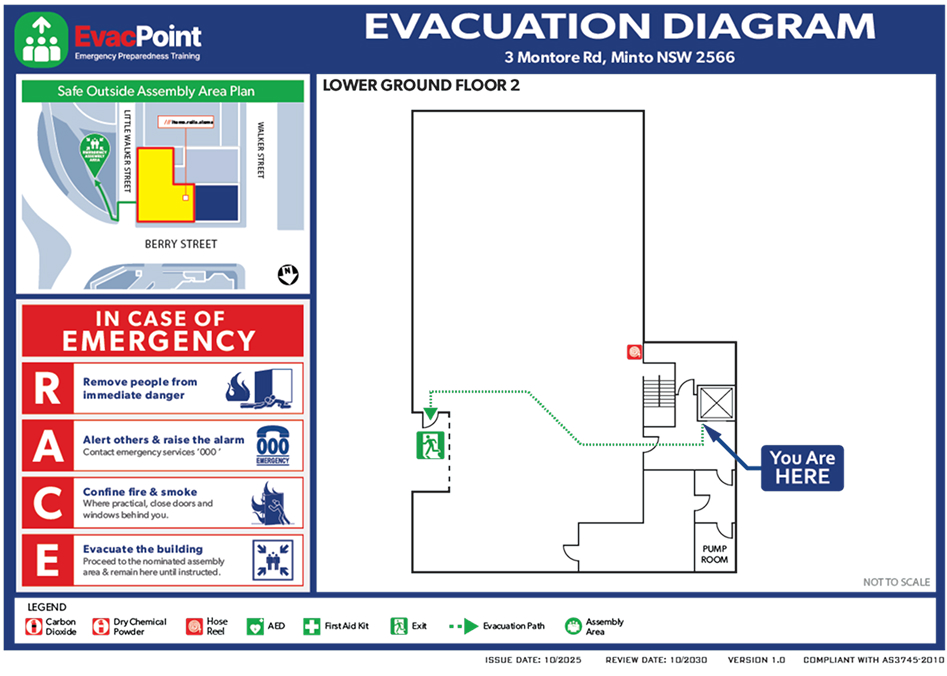
AS 3745:2010-compliant evacuation diagrams, marked up on-site by EvacPoint.
Every workplace covered by AS 3745:2010 must display clear, accurate emergency evacuation diagrams. EvacPoint designs and installs professional A3 diagrams across Sydney and NSW — measured and marked up on-site, so they reflect your building exactly, not a generic template.
Marked up on-site, not guessed from a floor plan — we attend your premises, verify exits, equipment and assembly points in person, and build diagrams that are genuinely accurate and compliant.
-
A3 Compliant Diagrams - Designed to AS 3745:2010.
- - Professionally designed and clearly laid out
- Accurate exits, paths of travel & assembly areas
- Fire equipment and first aid details included - - Professionally designed and clearly laid out
-
Professional On-Site Mark-Up - We come to you.
- Site attended and measured in person
- Equipment and exits verified on the day
- Diagrams matched precisely to your building -
Supplied Your Way - Flexible delivery or Installation.
- - Supplied with or without snaplock frames
- Wall-ready and easy to mount- - Replacement and updates available as your site changes
- - Supplied with or without snaplock frames
Professional onsite mark-up
Why It Matters
Out-of-date or inaccurate diagrams are one of the most common compliance gaps found in workplace audits. Accurate diagrams aren’t just a tick-box — in a real emergency they’re what helps people find the nearest exit fast.
How Often Do They Need Updating?
Under AS 3745:2010, evacuation diagrams must be reviewed at least every 5 years, or sooner if your layout, occupancy or emergency arrangements change. We’ll flag when yours are due.
Who It’s For
Any NSW workplace required to display evacuation diagrams — offices, childcare & OSHC centres, retail, warehouses, medical practices and commercial premises.
Turnaround
Diagrams delivered within 5 business days of your site visit.
Why EvacPoint?
- Marked up on-site — accurate, not generic
- Framed or unframed — supplied wall-ready or Installed
- Updates & reminders — compliance handled over time
- Fully AS 3745:2010 compliant
- Indoor vs outdoor: for external or exposed locations we recommend weatherproof ACP (Aluminium Composite Panel)